

Government orders three days of mourning in the country.
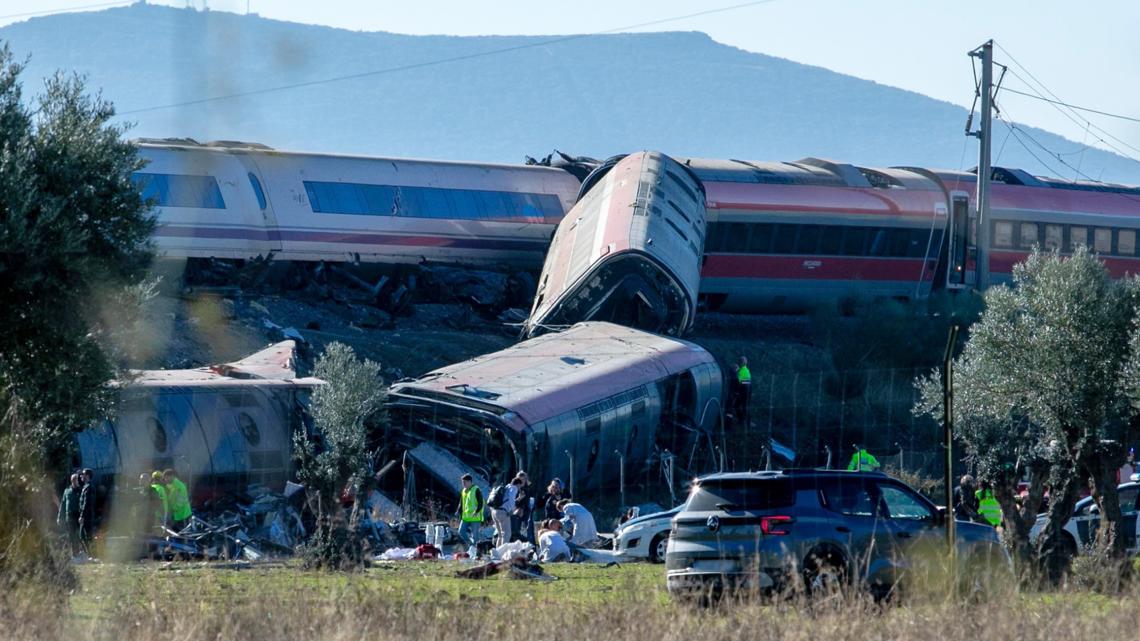
NEW DELHI: At least 68 people were killed and more than 100 injured after two high-speed trains collided in central Spain, triggering a major rescue operation and raising fresh concerns about railway safety in the country. The accident occurred on Wednesday morning near Urda in the province of Toledo, around 130 km south of Madrid, on a high-speed railway line connecting the Spanish capital with the southern region of Andalusia.
According to media reports, the collision involved a state-operated Renfe AVE train and a privately operated Iryo service. The Renfe train struck the rear of the stationary Iryo train, causing several carriages to derail. Some carriages plunged down an embankment, leaving wreckage scattered across the tracks and surrounding area.
Regional authorities said that approximately 544 passengers were travelling on the two trains. Emergency services, firefighters, police personnel and specialist rescue teams were deployed to the accident site to evacuate passengers, assist the injured and recover bodies from the damaged carriages. Several injured passengers were taken to nearby hospitals, with some reported to be in critical condition.
Spanish Transport Minister Óscar Puente said the collision occurred after a technical failure affected the railway's automatic train-control system. The malfunction reportedly disrupted services across a stretch of track, forcing trains to stop. According to initial accounts, the Renfe train was subsequently authorised to resume its journey despite a red signal remaining active, eventually striking the stationary Iryo service.
The circumstances surrounding the decision to restart the train have come under scrutiny. Officials have indicated that the control centre's handling of the technical failure may have played a critical role in the accident. However, investigators are examining the sequence of events and the possible contribution of system failures or procedural lapses before reaching a definitive conclusion.
Spanish Prime Minister Pedro Sánchez visited the affected area and promised a thorough investigation into the disaster. He said the government would establish what had happened and take appropriate action if negligence or system failures were identified. The government also announced three days of official mourning from October 29 to 31 to honour the victims.
The collision prompted the suspension of high-speed rail services on the Madrid-Andalusia corridor, disrupting travel between Madrid and southern Spain. Railway authorities and emergency agencies continued coordinating rescue, recovery and investigation efforts as the country mourned the victims.
The disaster has intensified debate over the safety and maintenance of Spain's extensive high-speed rail network. The country suffered another major high-speed train accident in January 2026, when a collision near Adamuz in southern Spain killed 46 people. The latest tragedy, involving the same two railway operators, has renewed calls for stronger safety procedures, reliable signalling systems and greater accountability in railway operations.
Spain's high-speed rail network is among the largest in the world and has long been considered a major achievement in the country's transport infrastructure. The latest accident has nevertheless raised difficult questions about operational safety and the response to technical failures, with the findings of the official investigation expected to be crucial in determining responsibility and preventing similar incidents.