

It delivered a major setback to President Donald Trump, raising questions about future of his administration.
NEW DELHI: The Democratic Party has secured control of both chambers of the United States Congress in a dramatic midterm election victory, marking a significant shift in the country's political landscape and delivering a strong electoral rebuke to President Donald Trump.
The results of Tuesday's elections saw Democrats make substantial gains across the country, including in traditionally Republican strongholds where the party had struggled for decades. The outcome represents a major setback for Trump, whose political influence and leadership became central issues during the election campaign.
Voter dissatisfaction over rising living costs, economic uncertainty, trade tariffs and the administration's handling of the war with Iran emerged as key factors shaping the results. Democrats successfully turned these concerns into a campaign focused on economic accountability, government transparency and stronger congressional oversight.
Among the most striking developments was the Democratic breakthrough in traditionally conservative states.
Kansas elected its first Democratic senator since the Great Depression, while Democrats secured a Senate victory in South Carolina, a state Trump had carried comfortably in the 2024 presidential election.
Texas also witnessed a significant political transformation, with Democrats winning a Senate seat and defeating Republican Governor Greg Abbott, ending a prolonged period of Republican dominance in several major statewide contests.
The victories underline the extent to which the political mood shifted across different regions and demographic groups.
Democrats also performed strongly in competitive House races, defeating Republican candidates in several closely watched districts. Their gains were particularly notable in agricultural communities and heavily Latino areas, including parts of Texas and Kansas.
The cost of living became one of the defining issues of the election.
Democratic candidates repeatedly criticised the administration's tariff policies, arguing that they had contributed to economic pressures on American households and businesses. They also questioned the financial and political costs associated with the conflict involving Iran.
Republicans, meanwhile, attempted to mobilise support around cultural and social issues, portraying Democratic candidates as too progressive on issues such as transgender rights and other contentious policy debates.
However, election-related polling indicated that economic dissatisfaction and concerns about the country's direction were major considerations for voters.
According to exit polls cited by Reuters, approximately half of voters viewed the midterm elections as an opportunity to express opposition to Trump's presidency. Around three-quarters said they were angry or dissatisfied with the direction of the country, while 70 per cent supported stronger congressional checks and balances on the president.
The Democratic takeover of Congress is expected to significantly complicate Trump's remaining two years in office.
With control of both the House of Representatives and the Senate, Democrats will gain greater authority over congressional committees, investigations, legislative priorities and the confirmation of presidential nominees.
Democratic lawmakers are expected to intensify scrutiny of the administration's policies, financial dealings and conduct, while seeking greater accountability from the White House.
The Senate's new Democratic majority could also create obstacles for Trump's judicial and executive appointments.
The results effectively end the period of unified Republican control in Washington and introduce a new phase of divided government, potentially creating legislative confrontations between Congress and the White House.
Trump acknowledged the election outcome and congratulated Democrats, according to Reuters, although he maintained that his absence from the ballot had affected the Republican performance.
The president also indicated a willingness to work with Democrats on certain issues, including immigration, while warning that he would veto legislation he considered unacceptable.
The results nevertheless raise questions about the future direction of the Republican Party, particularly as political attention gradually turns towards the 2028 presidential election.
Several Republican candidates endorsed by Trump suffered defeats, highlighting the difficulties the party faced in maintaining its coalition amid growing voter dissatisfaction.
Beyond the shift in congressional control, the elections produced several historic developments.
Democrat Keisha Lance Bottoms was elected as the first Black woman governor of a US state. In Florida, Republican Byron Donalds secured victory to become the country's first Black Republican governor.
Texas elected Democrat Gina Hinojosa as its first Latina governor, while California elected Xavier Becerra as its first Latino governor.
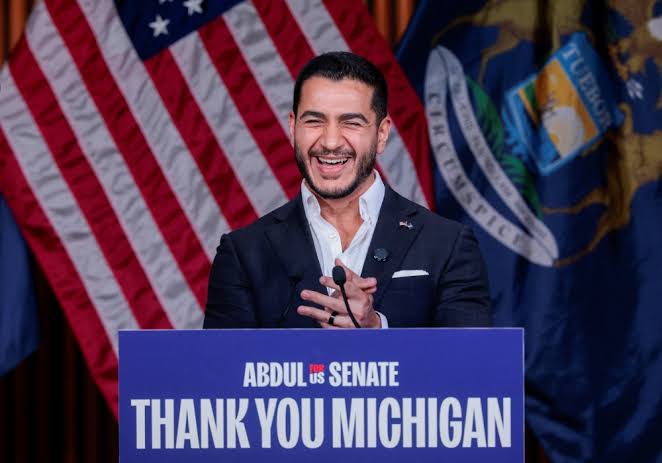
The Michigan Senate race also produced a historic outcome, with Democrat Abdul El-Sayed becoming the first Muslim elected to the US Senate.
These victories reflect important developments in the country's political representation and the changing electoral dynamics across different communities.
The Democratic victory marks a significant turning point in Trump's second presidency. It demonstrates the political consequences that economic dissatisfaction, foreign policy controversies and public concerns about executive power can have during midterm elections.
However, winning control of Congress does not automatically guarantee legislative success. Democrats will need to maintain unity across their moderate and progressive factions while navigating a potentially confrontational relationship with the White House.
For Trump, the election results represent a major political challenge at a critical stage of his presidency. With Democrats preparing to exercise greater congressional oversight, the administration is likely to face increased scrutiny and resistance to several of its policy priorities.
As the new Congress prepares to convene in January, Washington is heading towards a period of divided government in which political negotiations, investigations and legislative battles are likely to shape the final two years of Trump's term.
The message from the electorate has been unmistakable: control of the White House does not guarantee continued control of Congress, and voters retain the power to reshape the balance of political authority.