


India has begun producing military and transport aircraft domestically and is moving forward in civil aircraft manufacturing as well.
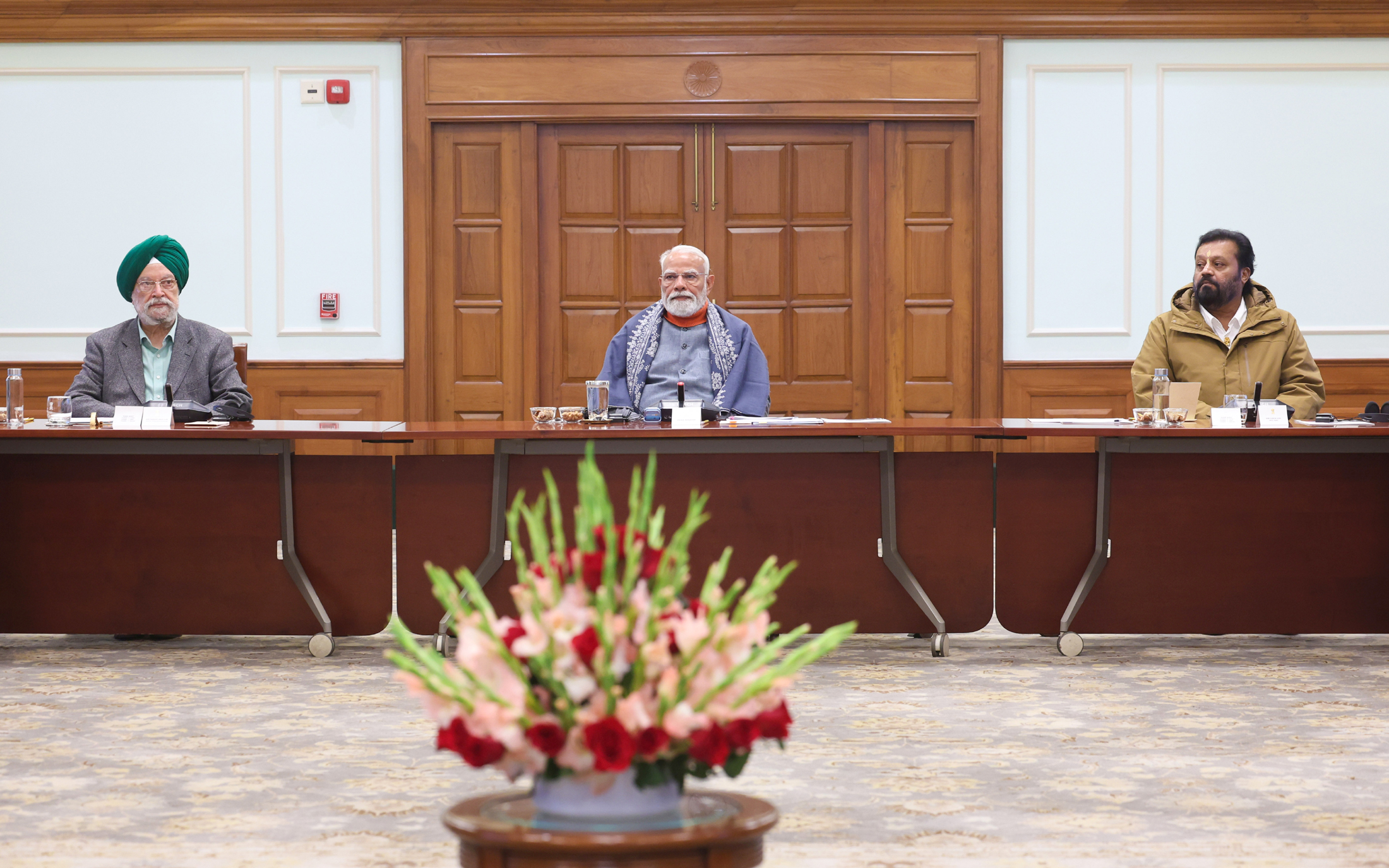
NEW DELHI: Prime Minister Narendra Modi addressed a gathering during the Wings India 2026 programme at Hyderabad in Telangana via video conferencing.
Speaking on the occasion, PM welcomed industry leaders, experts, and investors, noting that the next era of the aviation industry is full of aspirations and India is emerging as a major player. He highlighted the vast opportunities India presents in aircraft manufacturing, pilot training, advanced air mobility, and aircraft leasing, stressing the importance of the Wings India summit for all stakeholders.
PM Modi remarked that over the past decade, India’s aviation sector has undergone a historic transformation, recalling that air travel was once limited to an exclusive club but today India has become the world’s third-largest domestic aviation market. He pointed out that passenger traffic has grown rapidly and Indian airlines are expanding their fleets, with more than 1,500 aircraft ordered in recent years.
The PM underlined that this growth has been possible due to the government’s long-term vision, making air travel inclusive rather than exclusive, with the mission of enabling every citizen to travel easily by air. He emphasized that Tier-2 and Tier-3 cities have been connected with airports, noting that in 2014 India had 70 airports, while today the number has risen to more than 160, meaning the country has built over twice as many airports in just a decade. PM Modi added that over 100 aerodromes have been activated and, alongside this, the government launched the UDAN scheme to provide affordable fares. He stated that as a result of UDAN, 15 million passengers—around one and a half crore—have traveled on routes, many of which did not even exist earlier.
PM Modi remarked that as India advances towards the goal of becoming a developed nation, the expansion of air connectivity is certain to multiply many times over. He highlighted that by 2047, India is expected to have more than 400 airports, creating a vast network. PM Modi noted that the government is working on the next phase of the UDAN scheme, which will further strengthen regional and affordable air connectivity, alongside the expansion of sea-plane operations, with the aim of improving connectivity across every corner of the country.
Emphasising that the government is also focusing strongly on developing the tourism sector, PM Modi said tourist destinations are being upgraded nationwide, and air travel becoming the preferred choice for large numbers of people. The PM underlined that demand for air travel will see unprecedented growth in the coming years, creating greater opportunities for investment.
PM stated that as India emerges as a major global aviation hub, it is essential to reduce dependence on others for aviation needs and strengthen the path of self-reliance, which will also benefit companies investing in India. PM Modi highlighted that India is placing strong emphasis on aircraft design, manufacturing, and the aircraft MRO ecosystem. He stressed that India is already a major manufacturer and supplier of aircraft parts. The PM added that India has begun producing military and transport aircraft domestically and is moving forward in civil aircraft manufacturing as well. He pointed out India’s advantages, including its geographic position in global air corridors, unmatched domestic feeder network, and the future expansion of long-haul fleets, which together form a great strength.
The PM remarked that the day is not far when electric vertical take-off and landing aircraft designed and manufactured in India will give a new direction to the aviation sector, significantly reducing travel time. He further noted that India is working extensively on sustainable aviation fuel and is poised to become a major producer and exporter of green aviation fuel in the coming years.
Emphasising that India is undertaking numerous reforms in the aviation sector, PM Modi remarked that as a result, the country is emerging as a major aviation gateway between the Global South and the world. He highlighted that this presents significant opportunities for investors and manufacturers connected with the aviation industry.
PM Modi noted that India is connecting different regions and markets, with cities being linked to ports through multiple modes of transport. He emphasized that India’s aviation vision is equally focused on air cargo, and the government is working on all necessary regulatory reforms to make cargo movement faster and more efficient. He underlined that digital cargo platforms are simplifying and making the entire process more transparent, while off-airport processing arrangements are reducing the load on airports. The PM added that modern warehouses are being built to improve and accelerate cargo handling, which will reduce both delivery time and logistics costs in the future. Underlining that India is set to emerge as a major and competitive trans-shipment hub, PM Modi urged investors to explore opportunities in warehousing, freight forwarding, express logistics, and e-commerce sectors.
PM remarked that only a few countries in the world today possess such a large scale, policy stability, and technological ambition for the aviation industry as India does. He called upon every nation, every industry leader, and every innovator to take full advantage of this golden opportunity. PM Modi urged them to become long-term partners in India’s development journey and contribute to the growth of the global aviation sector. He concluded by inviting investors worldwide to join India’s flight as co-pilots and extended his best wishes for the successful organization of Wings India.