

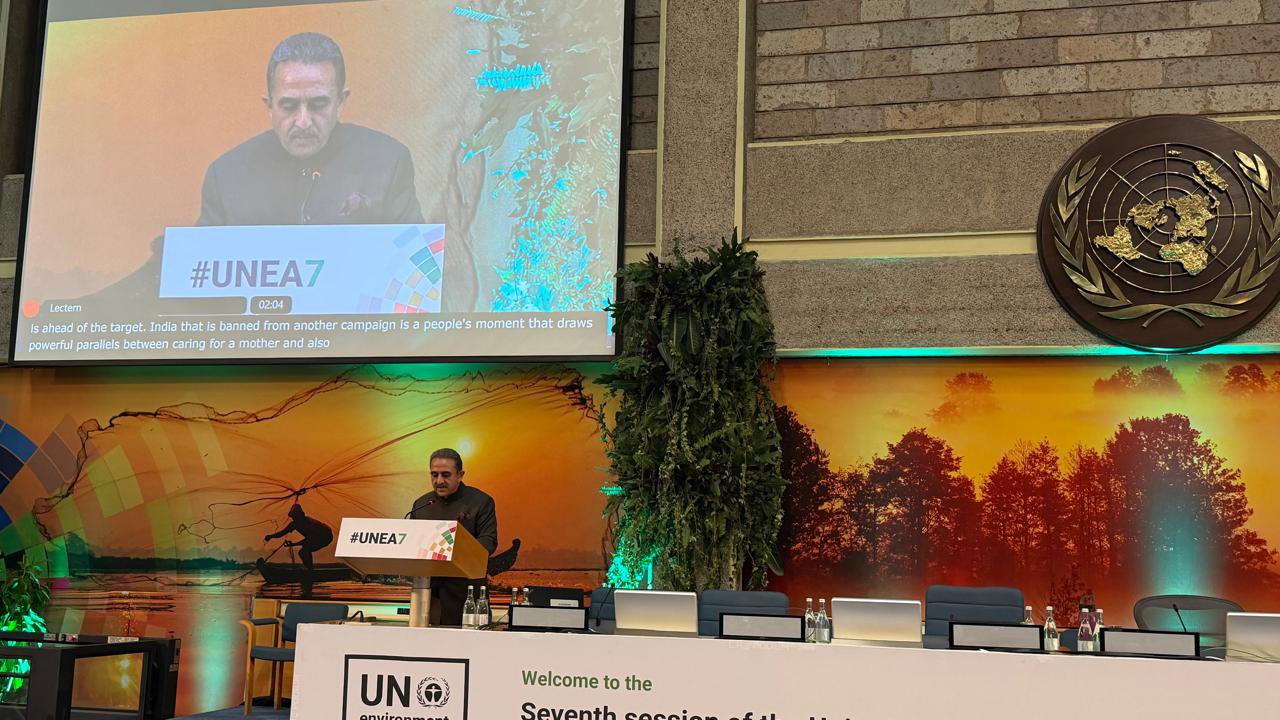
India reaffirms commitment to people-centric and equitable global environmental action: Kirti Vardhan Singh in Nairobi

Underlines importance of Finance, Technology Transfer and Capacity-building for Developing Countries for effective Implementation.
NEW DELHI: Union Minister of State for Environment, Forest and Climate Change, Kirti Vardhan Singh, delivered India’s National Statement at the High-Level Segment of the 7th Session of the United Nations Environment Assembly (UNEA-7), in Nairobi. He highlighted India’s people-centric approach to environmental solutions, strong domestic achievements, and steadfast commitment to the principles of Equity and Common But Differentiated Responsibilities and Respective Capabilities (CBDR-RC).
Singh conveyed India’s appreciation to Kenya and UNEP for the arrangements and noted that the UNEA-7 theme - Advancing Sustainable Solutions for a Resilient Planet - aligns strongly with India’s long-standing ethos. He stated that the theme resonates with “India’s long-standing commitment to living in harmony with nature and with our national vision of inclusive, sustainable, and climate-resilient development.”
The Minister also highlighted Mission LiFE, describing it as a global movement under Prime Minister Narendra Modi's leadership, “that promotes mindful consumption and encourages individual and collective action to adopt sustainable lifestyles”. Reiterating that India’s environmental aspirations stem from its diverse landscapes and community needs, the Minister said these reflect the people’s consistent demand for “clean air, safe water, healthy ecosystems, and a secure future for the next generation.”
Singh underscored that India approaches UNEA-7 with the conviction that global environmental solutions must remain people-centred and rooted in Equity, CBDR-RC, and National Circumstances, adding that “these principles enable ambition, foster trust, and strengthen multilateral cooperation.”
Singh highlighted India’s strong domestic track record in the last decade, stating that the country has “already reached 50% non-fossil installed electricity capacity, significantly ahead of our target”. He noted that India’s energy transition including solar, wind, hydropower, biofuels, green hydrogen, offshore renewables, and storage is reshaping our energy landscape. Flagship programmes such as PM Surya Ghar and PM-KUSUM are enabling households and farmers to access reliable and affordable clean energy while encouraging active public participation in climate action, he stated.
Highlighting India’s large-scale ecological efforts, the Minister pointed to major afforestation and restoration programmes. He emphasized the nationwide movement ‘Ek Ped Maa Ke Naam’ is a people’s movement that draws a powerful parallel between caring for our mothers and nurturing Mother Earth. Under this initiative, more than 2.6 billion saplings have been planted across the country, he informed.
Singh also mentioned India’s river rejuvenation efforts, including Namami Gange, which demonstrates “the effectiveness of science-based and community-driven approaches to restoring ecological health”. On resource efficiency, he underlined that India’s circular economy measures and Extended Producer Responsibility (EPR) frameworks in plastics, batteries, e-waste and end-of-life vehicles are promoting sustainable consumption and production.
Singh reaffirmed India’s leadership in multilateral platforms, noting ongoing collaboration through the International Solar Alliance, Global Biofuels Alliance, Coalition for Disaster Resilient Infrastructure, and the International Big Cat Alliance. These platforms, he said, reflect “India’s longstanding commitment to South–South cooperation and to strengthening the voice of the Global South in shaping global environmental solutions.”
The Minister underlined the importance of finance, technology transfer and capacity-building, noting that for many developing countries these remain essential enablers of effective implementation. He called for UNEA outcomes that complement existing Multilateral Environmental Agreements (MEAs), keep additional reporting requirements manageable, and remain practical and implementable for all Member States.
Recognizing growing wildfire threats, India has piloted a resolution on integrated fire management. Singh expressed gratitude, stating, “We thank the co-sponsors and other member States for their constructive engagement and support on the resolution.”
Concluding his statement, the Minister said that India views environmental action not merely as a policy imperative but as a pathway to dignity, opportunity, and well-being. Guided by the spirit of Vasudhaiva Kutumbakam – the world is one family, India reaffirmed its commitment to work constructively with all member states for a sustainable future and a resilient planet.