

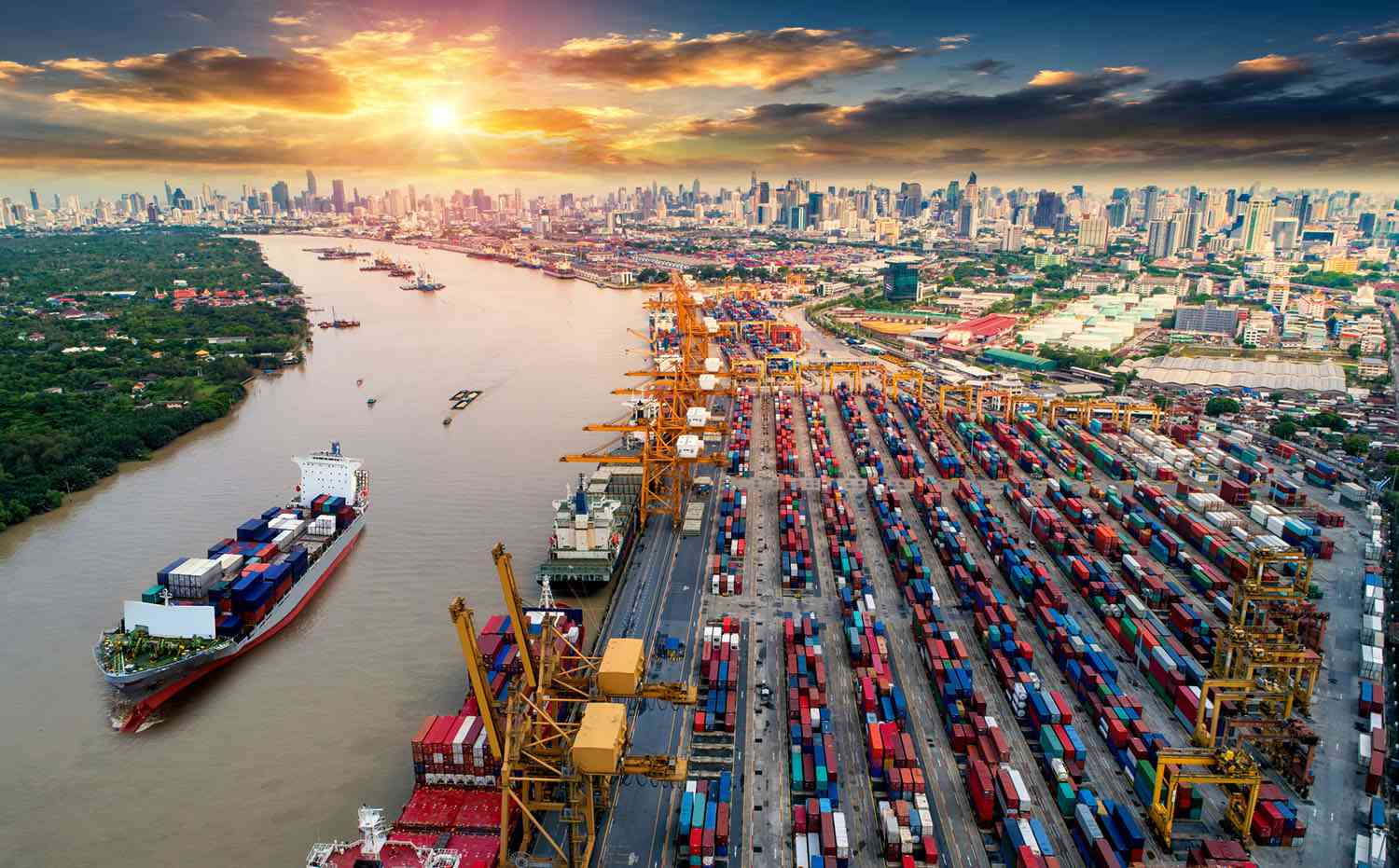

India has achieved a major breakthrough in global trade with the signing of the India–US Bilateral Trade Agreement.
NEW DELHI: India has achieved a major breakthrough in global trade with the signing of the India–US Bilateral Trade Agreement, securing preferential access for Indian exports to the United States’ $30-trillion economy. The agreement delivers wide-ranging tariff reductions, zero-duty access across key sectors, and deeper cooperation in digital trade, technology and healthcare—while firmly protecting India’s farmers, MSMEs and sensitive industries.
With Indian exports to the US valued at $86.35 billion in 2024, the pact significantly strengthens India’s competitiveness in textiles, leather, gems and jewellery, agriculture, machinery, pharmaceuticals, home décor and technology-driven industries.
A core feature of the agreement is the rollback of steep reciprocal tariffs that had reached as high as 50% on several Indian products.
Of the $40.96 billion in exports earlier subject to reciprocal tariffs:
$30.94 billion will now face a reduced tariff of 18%
$10.03 billion will receive zero-duty access
An additional $1.04 billion falls under exempt categories with no additional duty
Under Section 232 (end-use basis), $28.30 billion worth of Indian exports will now attract zero additional duty, down from earlier levies of up to 50%.
Overall, India secures:
18% tariff access on $900 billion of US global imports
Zero duty on $150 billion of imports
No additional duty on $720 billion of imports
Continued exemptions on $350 billion of imports
Preferential treatment under Section 232 tariffs
Strong Advantage Over Global Competitors
The agreement creates a decisive tariff advantage for Indian exporters. While Indian goods enter the U.S. at significantly lower duties, competing exporters continue to face higher tariffs, including:
China: 35%
Vietnam and Bangladesh: 20%
Malaysia, Indonesia, Philippines, Cambodia and Thailand: 19%
This differential sharply boosts India’s price competitiveness, particularly in labour-intensive and manufacturing sectors.
Sector-Wise Gains
Textiles and Apparel
Tariffs cut from 50% to 18%; silk receives zero-duty access
US market size: $113 billion
Benefits garments, carpets, cotton and man-made textiles, bed linen, curtains, yarn and baby clothing
Leather and Footwear
Tariffs reduced from 50% to 18%
U.S. market size: $42 billion
Boost for finished leather, footwear and components, supporting MSMEs and employment
Gems and Jewellery
Tariffs reduced to 18%
Zero duty for diamonds, platinum and coins
Market access across $61 billion, including $29 billion under zero-duty categories
Home Décor
Tariffs reduced to 18%
U.S. market size: $52 billion
Additional zero-duty access for $13 billion worth of products, including chandeliers and illuminated signs
Toys
Tariffs slashed to 18%
U.S. market size: $18 billion
Creates scale-up opportunities for Indian MSME manufacturers
Machinery and Parts
Tariffs cut from 50% to 18%
U.S. market size: $477 billion
India’s current exports: $2.35 billion
Supports India’s manufacturing and industrial export ambitions
Agriculture: Export Growth With Firm Safeguards
India maintains a $1.3 billion agricultural trade surplus with the U.S. Under the agreement:
$1.36 billion of agricultural exports receive zero additional duty
Covered products include spices, tea, coffee, fruits, nuts, cereals, processed foods and oils
$1.035 billion assured zero reciprocal tariff, providing long-term predictability
Highly sensitive sectors—dairy, meat, poultry, cereals, pulses, millets, oilseeds, GM foods and tobacco—remain fully protected. Limited liberalisation is achieved through tariff-rate quotas, phased reductions of up to 10 years, or minimum import price mechanisms.
Zero-Duty Access for $38 Billion in Industrial Exports
Zero-duty access applies to industrial exports worth $38 billion, covering aircraft parts, pharmaceuticals and APIs, auto components, gems and watches, as well as chemicals, plastics, paper, wood and rubber products.
Digital Trade, Semiconductors and Technology Cooperation
The agreement strengthens India’s digital ecosystem by ensuring access to advanced semiconductors and AI chips, data-centre infrastructure, cloud computing hardware, and ICT and cybersecurity equipment.
India is the world’s fifth-largest exporter of digital services, with $280 billion in digitally delivered services exports in 2024. A structured digital trade framework with the U.S. is expected to lower compliance costs, expand SME participation, and attract greater U.S. investment in AI, fintech, health-tech and cloud services.
Healthcare and Medical Infrastructure
Improved access to advanced diagnostic and surgical equipment will strengthen India’s healthcare system, enhancing affordability, capacity and patient outcomes.
A Strategic, Balanced and Future-Ready Partnership
The India–U.S. Bilateral Trade Agreement marks a transformative step in economic relations, combining expanded market access, tariff rationalisation, digital cooperation and technology sharing—while safeguarding India’s strategic and domestic priorities.
By balancing growth with protection and competitiveness with resilience, the agreement positions India for sustained export-led growth, deeper global integration and long-term economic strength.