

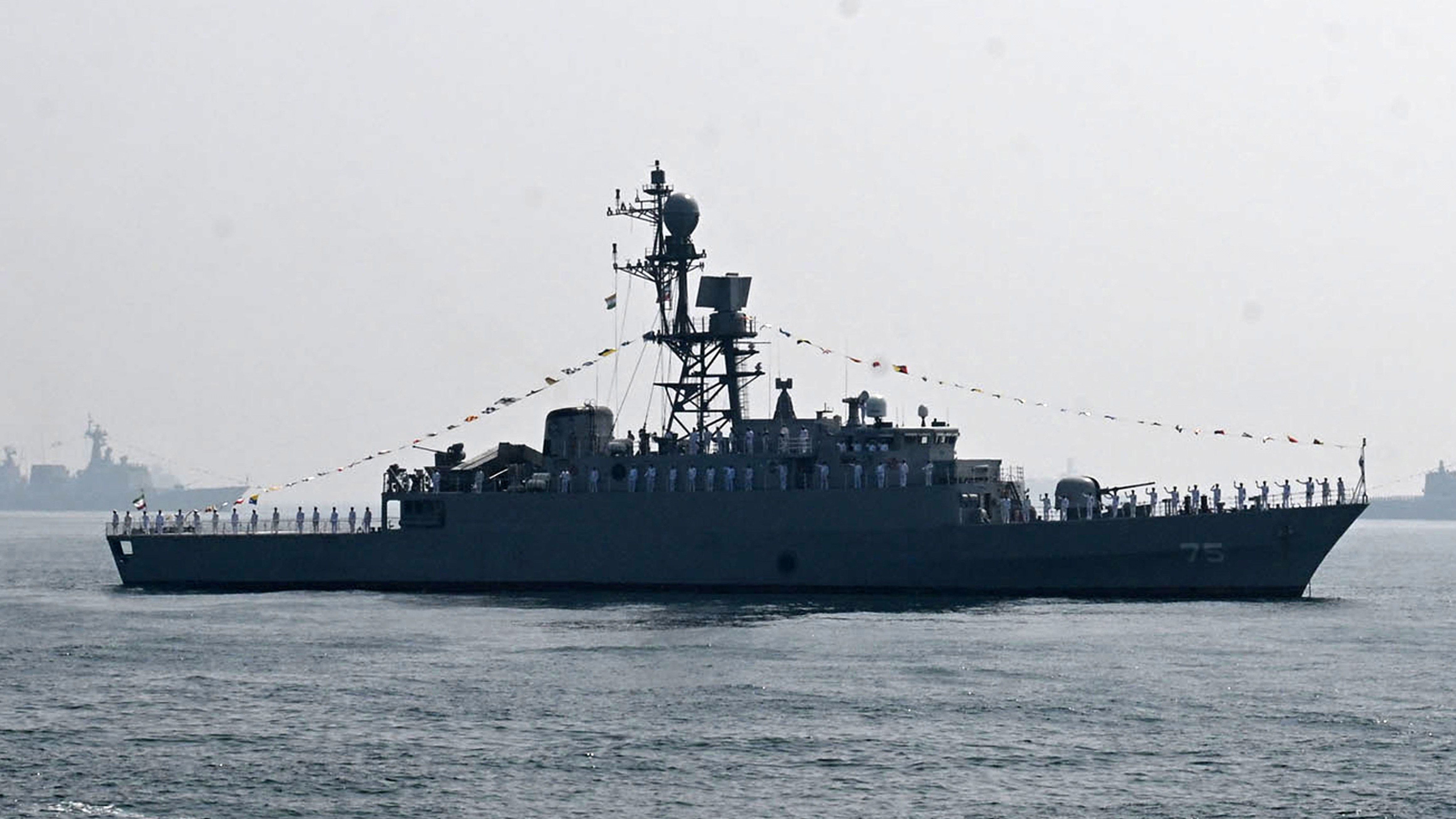

US intercepted Iranian-flagged ship on suspicion of attempting to bypass a naval blockade in Strait of Hormuz.
NEW DELHI: Tensions in the Middle East escalated sharply after Iran accused the United States of violating the fragile ceasefire by attacking and seizing an Iranian cargo vessel near the Strait of Hormuz. The incident, involving a US Navy destroyer, has triggered strong reactions from Tehran, which termed the move an act of aggression and warned that it would “soon respond,” raising fears of renewed conflict in the region.
According to available information, the US intercepted the Iranian-flagged ship on suspicion of attempting to bypass a naval blockade in the strategic waterway. The vessel was reportedly fired upon before being taken into control by American forces. Washington has maintained that the action was part of its enforcement operations, but Iran has rejected this justification, calling it a clear breach of the ceasefire understanding.
The development has also cast a shadow over diplomatic efforts, with Iran indicating that it is not currently planning to attend the next round of talks with the United States scheduled for Monday. The absence of Tehran from the negotiations could stall already fragile peace efforts and deepen the standoff.
The situation has put the ceasefire under severe strain, with both sides exchanging warnings amid rising military and political tensions. The Strait of Hormuz, a critical global oil transit route, remains at the centre of the confrontation, and any escalation in the area could have significant implications for global energy markets and supply chains.
The unfolding crisis has prompted concern across the international community, with calls for restraint and a return to dialogue growing louder. With diplomacy faltering and tensions mounting, the coming days are likely to be crucial in determining whether the ceasefire holds or the conflict widens further.