

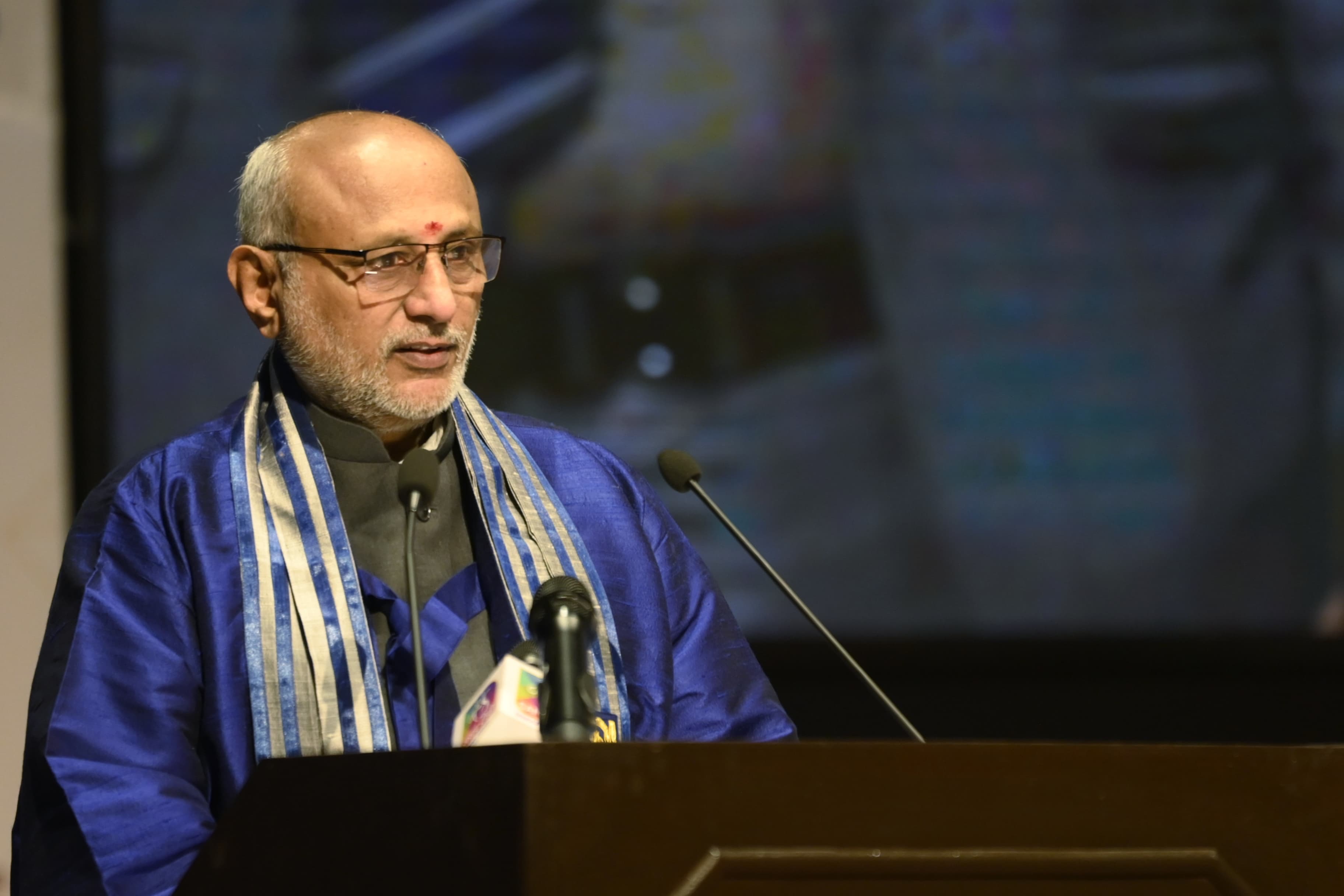
Modern development must align with traditions; scientific progress should be guided by ethical values: Vice-President Radhakrishnan

Says IGNOU, a pillar of inclusive and accessible higher education, has a learner base exceeding the population of many countries.
NEW DELHI: Vice President C. P. Radhakrishnan graced the 39th Convocation Ceremony of Indira Gandhi National Open University (IGNOU) in New Delhi where over 3.2 lakh learners received their degrees, diplomas and certificates.
Highlighting the transformative role of IGNOU, the Vice President described the University as a pillar of India’s open and distance learning ecosystem, significantly expanding access to higher education across the country. Emphasising its inclusive outreach, he noted that IGNOU has over 14 lakh learners, with 56 percent being women and 58 percent coming from rural and disadvantaged communities. He remarked that the University’s learner base exceeds the population of many countries, reflecting its substantial contribution to educational equity, social mobility, and national development. He encouraged students to embrace lifelong learning, uphold values, and contribute to nation-building.
Referring to the COVID-19 pandemic, the Vice President observed that IGNOU remained resilient due to its established distance learning model. He noted that the University effectively leveraged digital platforms such as SWAYAM and e-GyanKosh to ensure uninterrupted learning, emerging as a leader in technology-enabled education.
Welcoming the adoption of the National Education Policy (NEP), he noted that IGNOU has introduced four-year undergraduate programmes with multiple exit options, making higher education more flexible and learner-centric. He also commended the integration of Indian knowledge systems with modern education.
The Vice President said that emerging tools such as Artificial Intelligence can enhance learning experiences, improve student support and enable personalised education. He said there is no need to be afraid of modern developments. He noted that there were apprehensions when computers were introduced in the country, with fears that they would take away jobs; however, they ultimately generated more employment and contributed to national growth.
The Vice President added that modern technologies such as artificial intelligence should be approached in a similar manner. He, however, stressed the need for responsible and accountable use of such technologies.
The Vice President said that the greatest strength of Bharat lies in its belief in ethical values. He emphasized that modern development must go hand in hand with our traditions, and that scientific advancement should be guided by ethical values.
Concluding his address, and emphasising collective responsibility, he said that individual efforts, when combined, will contribute towards building a Viksit Bharat by 2047.