

Russia claims its air defence systems intercepted more than 1300 Ukrainian drones.
NEW DELHI: Ukraine has reportedly carried out its largest drone offensive against Russia since the beginning of the full-scale war in February 2022, with Russian authorities claiming that air defence systems intercepted more than 1,300 Ukrainian drones in a massive overnight operation spanning several regions.
According to Russia's Defence Ministry, 1,336 Ukrainian drones were shot down across 16 regions during the November 15–16 assault, surpassing the previous reported record of 1,254 drones on October 29.
The scale of the operation increased further on November 17, when Russia reported intercepting another 1,441 drones across 22 regions, describing it as an unprecedented attack. These figures are based on Russian official statements and have not been independently verified.
Moscow was among the principal targets of the latest drone offensive. Moscow Mayor Sergei Sobyanin said approximately 600 drones had approached the Moscow region between Sunday evening and Monday morning, with Russian air defences claiming to have intercepted 191 of them.
The attacks also reportedly targeted Crimea, the Black Sea and Sea of Azov regions, as well as industrial facilities in Russia's Rostov and Krasnodar regions.
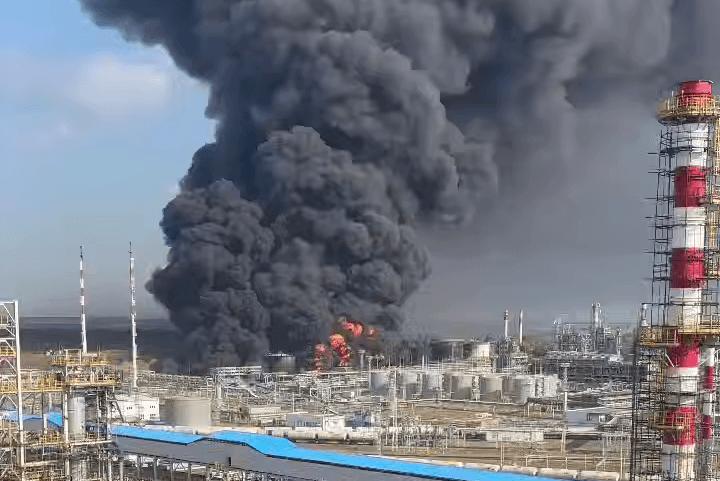
Russian regional authorities reported fires at four industrial facilities in the city of Azov. A separate incident was reported near the Ilsky oil refinery in Krasnodar, where falling drone debris reportedly injured six people.
One of the most significant developments was the reported targeting of the strategically important Crimean Bridge, which connects the Crimean peninsula with Russia's Krasnodar region.
Russian-backed Crimean Governor Sergei Aksyonov said the bridge was attacked for a second consecutive night, prompting authorities to suspend road traffic. He also reported that two people were killed in a drone attack in Crimea.
The 19-kilometre bridge is a crucial road and rail supply route for Russian forces and an important symbol of Moscow's control over the peninsula, which Russia annexed in 2014.
The extent of the damage caused by the latest attack remained unclear, while Russian authorities described the damage from the earlier strike as limited.
The latest offensive comes amid an intensification of Ukraine's long-range drone campaign against Russian energy infrastructure, particularly oil refineries that contribute to Moscow's economy and war financing.
Ukrainian President Volodymyr Zelenskyy claimed that Ukrainian strikes had knocked out more than 55% of Russia's oil-refining capacity. However, this figure has not been independently verified.
Media channels reported that Ukrainian drone attacks had reduced Russia's refining capacity by approximately 30%. Russian media and officials have also reported renewed fuel shortages in several regions.
The escalation comes despite recent US-brokered diplomatic engagements involving Russian and Ukrainian representatives in Abu Dhabi. Although discussions reportedly resulted in an agreement on a major prisoner exchange, no significant breakthrough was achieved on territorial disputes or other central issues.
Meanwhile, Russia has continued its missile and drone attacks on Ukrainian cities and energy infrastructure, keeping pressure on Ukraine's civilian population and power supply.
The latest drone offensive highlights the growing importance of long-range unmanned aerial systems in the conflict, as both sides increasingly target military logistics, energy facilities and strategically important infrastructure.